
AIDP 2026

Speakers

Pathologists and clinicians, along with the researchers who build and test the models.

Presenter profiles

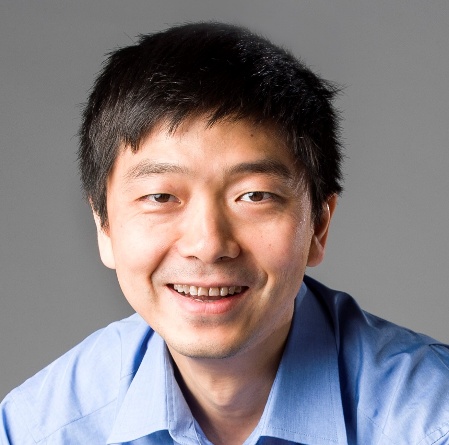
Prof. Zhe Wang

Prof. Zhe Wang

Xijing Hospital, Air Force Medical University (FMMU)

Online

Zhe Wang, MD, PhD, is a Professor and Director of the Department of Pathology at Xijing Hospital, Air Force Medical University. He also serves as a key researcher at the State Key Laboratory of Cancer Biology. Prof. Wang's research focuses on computational pathology and the development of AI foundation models for clinical-grade diagnostics. Notably, his team developed PathOrchestra, a comprehensive foundation model for multi-task histopathology analysis. His work bridges the gap between traditional pathology and AI-driven precision medicine, with numerous publications in journals like Nature Medicine and Nature Communications. He is a leading figure in the clinical translation of AI tools for cancer diagnosis in China.

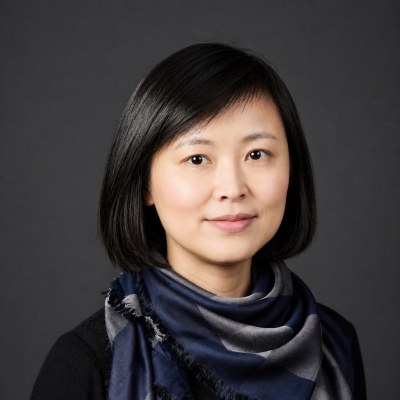
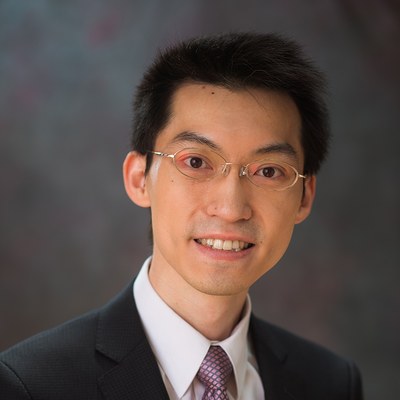
Prof. Zhi Huang

Prof. Zhi Huang

Perelman School of Medicine, University of Pennsylvania

In person · Organizing Committee

Zhi Huang, PhD, is a tenure-track Assistant Professor at the University of Pennsylvania. He previously completed a postdoctoral fellowship at Stanford University under Professors James Zou and Thomas Montine and earned his PhD from Purdue University. Dr. Huang is a rising star in vision-language models for pathology. He is the lead author of the landmark Nature Medicine (2023) cover article on PLIP (Pathology Language-Image Pretraining), which utilized medical social media data to train AI. His research focuses on human-AI collaboration and the development of foundation models that enhance diagnostic accuracy and knowledge sharing in digital pathology.

Prof. Mingyao Li

Prof. Mingyao Li

Perelman School of Medicine, University of Pennsylvania

Invited speaker

Mingyao Li, PhD, is a Professor of Biostatistics, Statistics and Data Science, and Digital Pathology at the University of Pennsylvania, where she directs the Statistical Center for Single-Cell and Spatial Genomics. Her research develops statistical and computational methods for single-cell and spatial transcriptomics, statistical genetics, and computational pathology, including machine-learning approaches that integrate histology images with molecular data. She is a Fellow of the American Statistical Association and the American Association for the Advancement of Science, and an elected member of the International Statistical Institute. She has published more than 200 peer-reviewed papers, including work in Nature Genetics, Nature Methods, Nature Biotechnology, Science, and The Lancet, and was named to The Pathologist’s 2024 Power List for her contributions to integrating spatial transcriptomics with histopathology.

Prof. Hoifung Poon

Prof. Hoifung Poon

Microsoft Research & University of Washington

Online

Hoifung Poon, PhD, is the General Manager at Microsoft Research Health Futures, where he leads the real-world evidence and precision health initiatives. He is also an affiliated faculty member at the University of Washington Medical School. Dr. Poon is a leader in biomedical natural language processing and multimodal AI. His team developed influential models such as PubMedBERT and BioGPT. His recent work focuses on whole-slide foundation models, including a significant 2024 publication in Nature regarding digital pathology from real-world data. He has received multiple Best Paper Awards at top AI conferences like NAACL and EMNLP for his contributions to machine reading and precision medicine.

Prof. Kun-Hsing Yu

Prof. Kun-Hsing Yu

Harvard Medical School; Brigham and Women's Hospital

Online (TBC)

Kun-Hsing “Kun” Yu, MD, PhD, is an Associate Professor of Biomedical Informatics at Harvard Medical School and an Assistant Professor of Pathology at Brigham and Women's Hospital. He pioneered one of the first fully automated AI algorithms for extracting thousands of features from whole-slide pathology images. His lab integrates quantitative histopathology with genomics, epigenomics, transcriptomics, and proteomics to predict clinical outcomes in cancer, and has identified cellular morphologies associated with patient prognosis. His AI methods have been independently validated by more than 200 research groups. He is a Fellow of the American Medical Informatics Association and has received the NIH Maximizing Investigators' Research Award, a Google Research Scholar Award, and an American Cancer Society Research Scholar Award. He earned his MD from National Taiwan University and his PhD in Biomedical Informatics from Stanford University.

Prof. Ronald Chan

Prof. Ronald Chan

CUHK & Hong Kong Hospital Authority

In person · Organizing Committee

Dr. Cheong Kin Ronald Chan is a Consultant at the Hospital Authority, NTEC (Pathology), and Lab Director of North District Hospital, as well as an Honorary Clinical Associate Professor at the Department of Anatomical and Cellular Pathology, The Chinese University of Hong Kong. He leads the Pathology Artificial Intelligence Development and Assessment Laboratory. Dr. Chan has published numerous papers in reputable journals and conferences, contributing significantly to the fields of digital pathology and artificial intelligence. His work includes over 30 publications, with notable journals such as Diagnostic Cytopathology, The Oncologist, and Advanced Science. He has received several awards, including the Teachers of the Year Awards from the Faculty of Medicine, CUHK in 2021 and 2023. Dr. Chan has also been involved in multiple grants related to digital pathology and AI, serving as Principal Investigator on several key projects.